
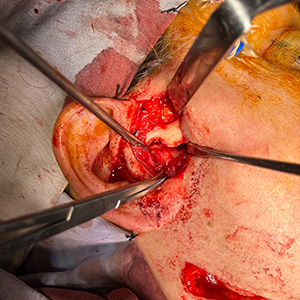
When is it important to consider surgery?
The temporomandibular joint (TMJ) is one of the most complex joints in the human body. It allows essential movements such as speaking, chewing, yawning, and facial expression. When this joint is affected, the impact on a patient’s quality of life can be significant.
Although many TMJ disorders can be managed conservatively, there are situations in which surgery becomes the best option to relieve pain, restore function, and prevent further joint deterioration.
What is the temporomandibular joint?
The TMJ connects the jaw to the skull and functions as both a hinge and a sliding joint. It is composed of:
- The mandibular bone
- The temporal bone
- An articular disc
- Muscles, ligaments, and neural structures
Its complexity means that any alteration can produce varied and sometimes difficult-to-diagnose symptoms.
TMJ disorders: a common condition
Temporomandibular joint disorders are relatively common and can occur at any stage of life. The most frequent causes include:
- Bite abnormalities
- Bruxism
- Trauma
- Articular disc degeneration
- Structural jaw problems
Not all patients present the same symptoms or require the same treatment.
Most common symptoms of TMJ disorders
TMJ disorders may present with:
- Jaw or facial pain
- Clicking or grinding sounds when opening or closing the mouth
- Limited mouth opening
- Frequent headaches
- Neck pain
- Jaw locking
- Pain when chewing or speaking
When these symptoms persist, specialized evaluation is essential.
When should TMJ surgery be considered?
Surgery is considered when:
- Pain is chronic and persistent
- Structural damage to the joint is confirmed
- Severe disc displacement is present
- Jaw mobility is significantly limited
- Conservative treatments have failed
- The condition significantly affects daily life
In these cases, surgery aims to address the underlying cause, not just relieve symptoms.
Types of temporomandibular joint surgery
Minimally invasive surgery
Includes procedures such as arthrocentesis or arthroscopy, indicated in selected cases to improve mobility and reduce inflammation.
Open TMJ surgery
Indicated in complex cases such as:
- Severe joint degeneration
- Advanced structural damage
- Significant anatomical alterations
This type of surgery requires a high level of specialization and experience.
Importance of accurate diagnosis
One of the most common mistakes in TMJ disorders is treating symptoms without identifying the true cause. Proper diagnosis requires:
- Detailed medical history
- Specialized physical examination
- Advanced imaging studies
Dr. Moisés Guerrero performs a comprehensive evaluation, differentiating TMJ disorders from other conditions with similar symptoms, such as neuralgias or cervical issues.
Benefits of surgery when properly indicated
When surgery is correctly indicated, it can provide:
- Significant pain relief
- Improved jaw function
- Increased mouth opening
- Long-term joint stability
- Improved quality of life
The primary goal is always to restore function and patient well-being.
Recovery and post-operative follow-up
Recovery varies depending on the type of surgery performed. In general:
- Medical follow-up is essential
- Post-operative care is combined with rehabilitation
- Results are evaluated progressively
Proper medical guidance is key to treatment success.
Dr. Moisés Guerrero’s experience in TMJ surgery
Dr. Moisés Guerrero is a Maxillofacial Surgeon with experience in the diagnosis and surgical treatment of complex TMJ disorders.
His approach is based on:
- Accurate diagnosis
- Individualized treatment
- Surgical safety
- Functional and long-lasting results
Conclusion
Temporomandibular joint disorders can significantly affect daily life. Although not all cases require surgery, when surgery is indicated, it can make a definitive difference.
Specialized evaluation is essential to determine the best treatment for each patient.