
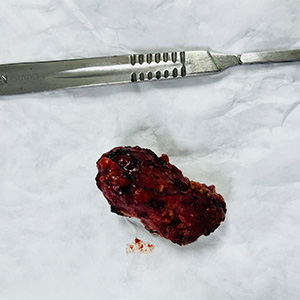
What is the parotid gland?
The parotid gland is one of the main salivary glands of the human body. It is located on each side of the face, in front of the ear and below the cheekbone, and plays an essential role in saliva production, which is necessary for digestion and oral health.
Due to its anatomical location, the parotid gland is closely related to important structures such as:
- The facial nerve
- Blood vessels
- Muscles of facial expression
This makes any alteration of this gland particularly important to evaluate carefully.
What are parotid tumors?
Parotid tumors are abnormal growths that develop within the salivary gland.
They may be:
- Benign (the majority of cases)
- Malignant (less frequent, but clinically more complex)
Although many parotid tumors are non-cancerous, all should be evaluated by a specialist, as behavior and treatment vary depending on type and size.
Why is early diagnosis important?
Early diagnosis allows:
- Identification of the nature of the tumor
- Proper treatment planning
- Reduction of surgical risks
- Preservation of facial nerve function
Detecting a tumor at an early stage often results in safer treatments and better functional outcomes.
Signs and symptoms of parotid tumors
One of the main challenges is that many parotid tumors grow slowly and without pain, delaying medical consultation.
Warning signs include:
Appearance of a lump or mass
- Usually painless
- Located in front of or below the ear
- May increase in size over time
Facial asymmetry
When one gland begins to enlarge more than the other.
Sensation of pressure or heaviness
Especially in the mandibular or preauricular region.
Persistent pain
Although not always present, pain may occur in certain cases.
Facial nerve alterations
Such as:
- Facial weakness
- Difficulty moving one side of the face
- Changes in facial expression
These symptoms require immediate evaluation.
Are all parotid tumors cancer?
No. Approximately most parotid tumors are benign, such as pleomorphic adenoma.
However:
- Some benign tumors may grow significantly
- Others may transform over time
- Malignant tumors require timely specialized treatment
For this reason, observing or ignoring a parotid mass is not recommended, even if it is painless.
How are parotid tumors diagnosed?
Proper diagnosis includes a comprehensive evaluation that may involve:
- Specialized clinical examination
- Imaging studies (ultrasound, computed tomography, or magnetic resonance imaging)
- Fine-needle aspiration biopsy (in selected cases)
These studies help determine:
- Tumor size
- Exact location
- Relationship with the facial nerve
- Features suggesting benign or malignant behavior
Treatment of parotid tumors
In most cases, surgical treatment is the preferred option.
Surgical goals include:
- Safe tumor removal
- Preservation of the facial nerve
- Prevention of recurrence
- Confirmation of definitive diagnosis
The type of surgery depends on:
- Tumor size
- Location
- Behavior
- Findings from previous studies
The importance of a specialized oral and maxillofacial surgeon
Parotid gland surgery is a delicate and highly specialized procedure, due to the close relationship with the facial nerve.
It must be performed by an oral and maxillofacial surgeon with specific experience in salivary gland surgery.
Dr. Moisés Guerrero has extensive experience in the diagnosis and surgical treatment of parotid tumors, offering a precise, safe, and high-level medical approach.
Recovery and follow-up
Recovery varies depending on the type of surgery, but generally includes:
- Close clinical follow-up
- Inflammation control
- Evaluation of facial function
Proper follow-up is essential to ensure satisfactory functional and aesthetic outcomes.
Conclusion
Parotid tumors are often silent in their early stages.
Identifying changes early and consulting a specialist can make a significant difference in treatment and prognosis.
In the presence of any persistent mass, growth, or facial asymmetry, specialized evaluation is essential.